The problem isn’t aging itself. It’s muscle loss, metabolic slowdown, chronic inflammation, and years of inconsistent movement. The good news? These are modifiable. And one of the most powerful tools to beat the odds is structured strength training and resistance training guided by intelligent personal training.
What’s Driving Chronic Disease Before 50?
Chronic disease rarely appears overnight. It builds slowly through patterns that seem harmless at first: sitting too much, sleeping too little, eating under stress, skipping strength work, and relying only on occasional cardio.
Loss of muscle mass after age 30
Increased visceral fat around the abdomen
Insulin resistance from low muscle activity
Chronic stress elevating cortisol levels
Joint stiffness and reduced mobility
What this really means is that most chronic disease risk is tied to metabolic and muscular decline, not just genetics. And that’s exactly where strength training changes the trajectory.
The Muscle Decline Problem: The Real Turning Point
After 30, adults naturally begin losing muscle if they don’t train against it. This process, known as sarcopenia, accelerates in your 40s and 50s. Less muscle means lower metabolism, reduced glucose control, weaker joints, and increased injury risk.
Resistance training slows and often reverses this decline. By preserving and building lean muscle mass, you improve:
Insulin sensitivity and blood sugar control
Metabolic rate and fat regulation
Bone density and joint stability
Posture and spinal health
Hormonal balance and stress resilience
That’s why personal training focused on strength isn’t cosmetic. It’s preventative medicine in motion.
Chronic Diseases Most Linked to Muscle Loss
When muscle declines and inactivity increases, the following conditions become far more likely:
Type 2 diabetes and pre-diabetes
Hypertension and heart disease
Fatty liver disease
Obesity and metabolic syndrome
Osteoarthritis and joint degeneration
Chronic lower back pain
Each of these conditions responds positively to structured resistance training and condition-focused personal training programs.
Why Cardio Alone Isn’t Enough
Cardio improves heart health and endurance, but it doesn’t fully protect muscle mass. Many people over 40 rely only on walking or treadmill sessions. While helpful, this approach doesn’t significantly increase muscle strength or metabolic reserve.
Strength training and resistance training:
Build lean muscle mass
Improve insulin sensitivity
Reduce visceral fat
Strengthen joints and connective tissue
Improve posture and daily function
The combination of strength training plus moderate cardio is what creates long-term resilience.
How Personal Training Changes the Outcome
Most people know they should exercise. The gap is execution. That’s where structured personal training makes the difference, especially in Dubai’s busy environment.
A well-designed program includes:
Full-body resistance training 2–4 times per week
Mobility and joint care exercises
Progressive overload without overtraining
Condition-specific modifications (diabetes, thyroid, joint pain)
Accountability and measurable progress tracking
Consistency beats intensity. A smart program protects recovery while steadily building strength.
What a Preventative Strength Program Looks Like
You don’t need extreme workouts. You need structured resistance training that challenges major muscle groups safely and progressively.
Core Movements
Squats or leg press
Hip hinges (Romanian deadlifts)
Rows and pull-downs
Chest press or push-ups
Step-ups or lunges
Core stability exercises
Weekly Structure
Strength training: 2–3 sessions per week
Daily walking: 20–40 minutes
Mobility sessions: 8–12 minutes most days
This structure supports metabolic health, joint care, and long-term vitality without overwhelming your schedule.
How to Beat the Odds Before 50
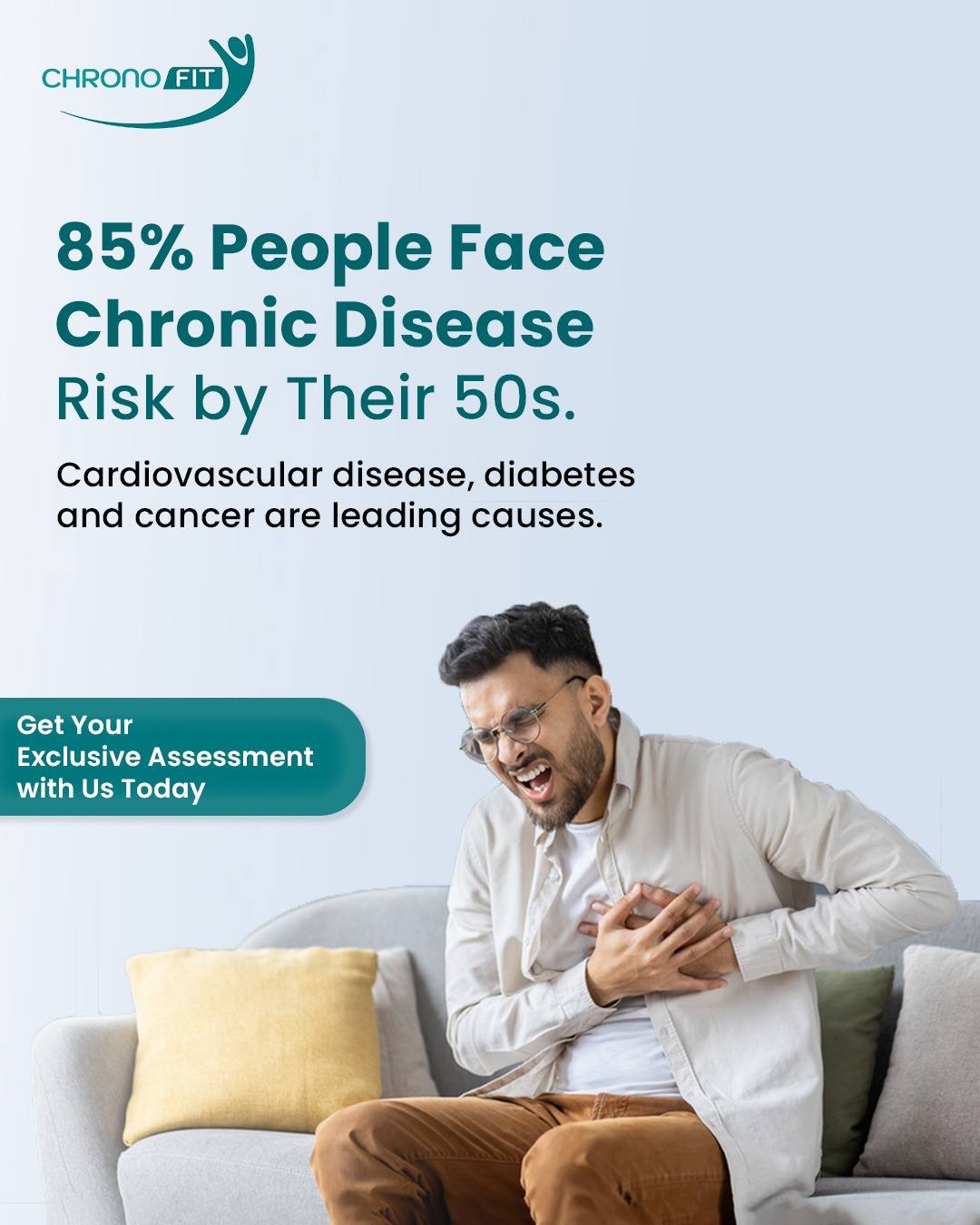
If 85% of adults develop chronic disease patterns by 50, the goal is simple: stay in the 15% who actively protect their health. That doesn’t require perfection. It requires consistency in strength training, intelligent personal training, and steady resistance progression.
Prioritise muscle building over scale weight
Train consistently, not aggressively
Protect sleep and recovery
Maintain daily movement outside the gym
Monitor blood markers annually
The earlier you start, the easier it becomes.
FAQs (People Also Ask)
Can strength training prevent chronic disease?
Yes. Strength training improves insulin sensitivity, reduces visceral fat, supports heart health, and strengthens joints, all of which reduce chronic disease risk.
Is resistance training safe after 40?
Absolutely, when properly structured. In fact, it becomes more important with age to preserve muscle and bone density.
How many days a week should adults over 40 train?
2–3 strength training sessions per week combined with daily walking is an effective baseline.
Does muscle mass decline naturally with age?
Yes, but resistance training slows and often reverses muscle loss.
What’s the best type of exercise for long-term health?
A combination of strength training, resistance training, daily movement, and mobility work provides the most complete protection.
Final Thoughts
Chronic disease by 50 isn’t inevitable. It’s often the result of muscle loss, metabolic decline, and years of low movement. The antidote is simple but powerful: structured resistance training, consistent strength training, and intelligent personal training that builds resilience instead of exhaustion.
If you want to beat the odds in Dubai’s demanding lifestyle, start building strength now. Because muscle isn’t just about appearance. It’s your insurance policy against chronic disease.