Obesity and Muscle Loss: The Hidden Problem Most Weight Loss Plans Ignore
Most obesity conversations focus on body weight. People are told to eat less, do more cardio and lose kilograms as quickly as possible. But this approach often misses an important factor: muscle.
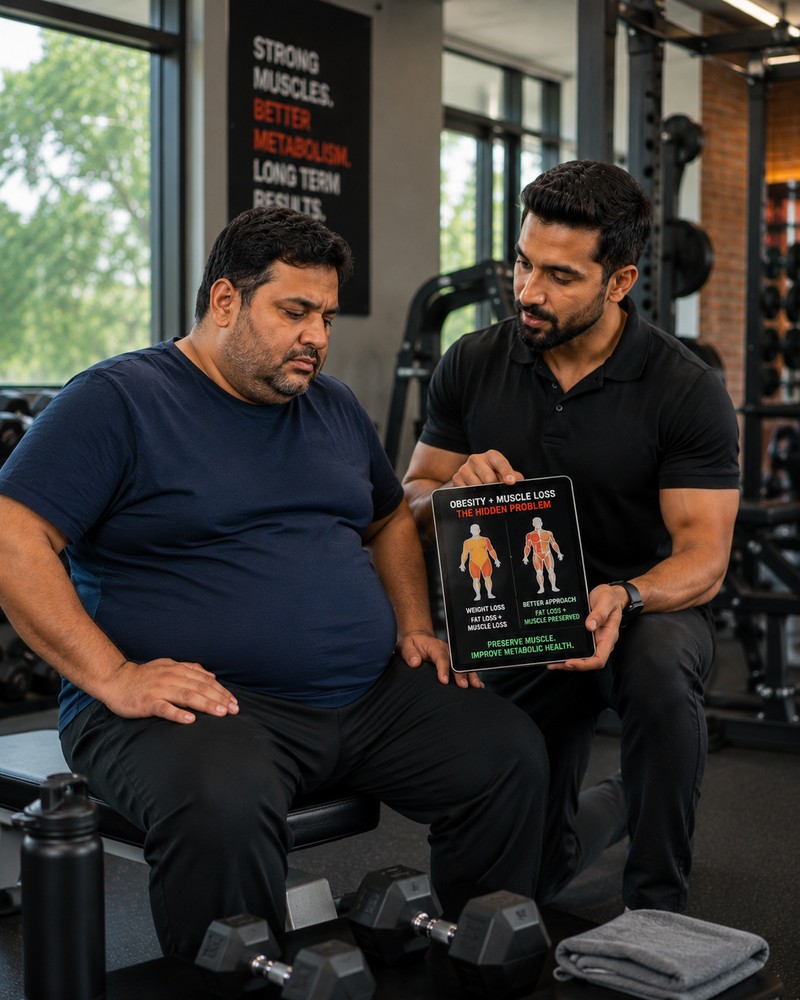
Many people living with obesity also have low muscle quality, poor metabolic health, low stamina and reduced movement confidence. If weight loss happens without preserving muscle, the body may become weaker, more fatigued and harder to maintain long-term.
This is why modern obesity-focused fitness is shifting toward strength training, movement quality and sustainable metabolic health instead of extreme dieting alone.
Why Obesity Is More Than a Weight Problem
Obesity is closely connected to metabolism, insulin resistance, inflammation, stress, inactivity and recovery quality. The body is not only carrying extra fat. It is often dealing with reduced movement efficiency and lower physical resilience.
Reduced muscle activity
Poor insulin sensitivity
Higher visceral fat
Lower daily movement
Joint stress and mobility limitations
Fatigue and reduced exercise confidence
This means obesity management should focus on improving the whole system, not only reducing scale weight.
Why Muscle Matters in Obesity Management
Muscle helps regulate metabolism, support joints and improve glucose control. When muscle mass is low, the body has fewer resources to manage energy effectively.
Strength training helps by:
Improving insulin sensitivity
Supporting healthier metabolism
Increasing movement confidence
Reducing long-term muscle loss during fat reduction
Improving posture, balance and physical function
This is why obesity-focused training should include resistance training, not only cardio.
Why Extreme Cardio and Crash Diets Often Fail
Many people with obesity start with aggressive diets and excessive cardio because they want fast results. But this can create major problems.
Muscle loss instead of healthy body composition change
Fatigue and poor recovery
Increased hunger and cravings
Joint pain from excessive impact
Difficulty maintaining the routine long-term
Extreme plans may produce temporary weight loss, but sustainable health usually requires a more balanced strategy.
Why Strength Training Is Important for Obesity
Strength training helps improve the body’s ability to use energy efficiently. It also helps maintain muscle while reducing fat mass.
Key Benefits
Better metabolic health
Improved glucose handling
More stable energy levels
Reduced injury risk through stronger joints and muscles
Higher confidence with movement
Most importantly, strength training helps people become physically capable instead of only focused on scale numbers.
Best Exercises for Obesity-Friendly Strength Training
Exercises should match the individual’s current fitness level, joint tolerance and movement ability. The best program is the one that can be repeated consistently.
Leg press or supported squats
Step-ups or box-supported movements
Seated rows and pull-downs
Chest press machines or incline push-ups
Farmer carries
Walking-based conditioning
Progress should be gradual, with focus on comfort, technique and movement quality.
Why Walking Still Matters
Walking is often underrated in obesity management. Regular walking improves circulation, reduces sedentary time and supports calorie expenditure without excessive joint stress.
A practical weekly structure may include:
2–3 strength training sessions weekly
Daily walking goals
Mobility work for joint movement and posture
Gradual conditioning progression
This combination is usually more sustainable than extreme workout plans.
Why Condition-Conscious Training Matters
People living with obesity may also manage other concerns such as diabetes, fatty liver, high blood pressure, knee pain or sleep issues. This means training should be adapted carefully.
Chronofit’s condition-conscious personal training approach focuses on:
Joint-friendly exercise progression
Strength and mobility development
Metabolic health support
Recovery and sustainability
Long-term consistency instead of quick fixes
This helps clients build confidence and physical resilience safely.
Signs Your Obesity-Focused Plan Is Working
You feel stronger in daily life
Walking feels easier
Energy levels improve
Waist size gradually reduces
Workout recovery improves
You become more consistent with movement
Real progress is not only about scale weight. Physical capability matters too.
FAQs
Is strength training good for obesity?
Yes. Strength training helps preserve muscle, improve metabolism and support long-term fat loss more effectively than cardio alone.
Can obese beginners lift weights safely?
Yes, when training is adapted to fitness level, joint tolerance and movement ability.
Should obese individuals only focus on cardio?
No. Cardio helps, but muscle-building strength training is important for long-term metabolic and physical health.
Why does muscle matter during weight loss?
Muscle supports metabolism, strength, movement quality and long-term weight maintenance.
How does Chronofit approach obesity-focused fitness?
Chronofit uses condition-conscious personal training that focuses on strength, mobility, recovery and sustainable progression.
Final Thoughts
Obesity management should not only focus on losing weight quickly. It should focus on building a stronger, healthier and more capable body.
Chronofit’s condition-conscious personal training approach helps support long-term health through strength training, movement quality and sustainable fitness progression instead of extreme short-term solutions.