Hypertension and Strength Training: Can Exercise Naturally Help Lower Blood Pressure?
High blood pressure, also known as hypertension, is one of the most common lifestyle-related health concerns today. Many people only discover they have hypertension during a routine health check because symptoms are often silent.
Medication may be necessary for many individuals, but lifestyle changes still play a major role in long-term management. One of the most effective yet often misunderstood tools is strength training.
Most people associate blood pressure improvement only with walking or cardio. While cardio helps, structured strength training can also support healthier blood pressure by improving metabolism, reducing abdominal fat and helping the cardiovascular system work more efficiently.
What Causes High Blood Pressure?
Hypertension is influenced by several lifestyle and metabolic factors. It is rarely caused by one issue alone.
Long sitting hours
Low physical activity
High stress levels
Poor sleep quality
Obesity and abdominal fat
Insulin resistance and poor metabolic health
High sodium intake combined with poor lifestyle habits
Because hypertension is closely tied to lifestyle patterns, exercise becomes an important long-term strategy.
Can Strength Training Help Hypertension?
Yes, when done correctly. Moderate resistance training can support healthier blood pressure by improving circulation, insulin sensitivity and body composition.
Strength training may help by:
Reducing abdominal fat
Improving vascular function
Supporting healthier metabolism
Improving insulin sensitivity
Increasing movement capacity and stamina
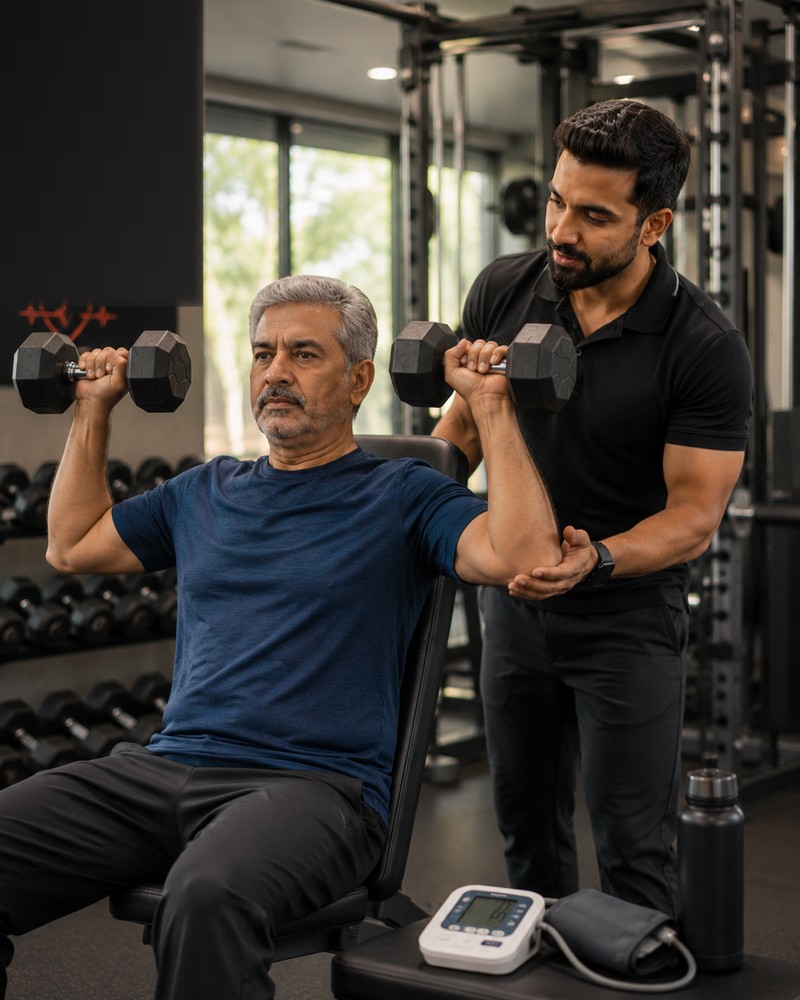
The key is proper programming. Hypertension-focused training should avoid excessive strain, breath-holding and uncontrolled intensity.
Why Strength Training Is Better Than Extreme Workouts
Many people believe they need aggressive bootcamp-style workouts to improve health quickly. But extremely intense exercise can sometimes create unnecessary stress, especially for beginners or people with hypertension.
A smarter approach focuses on:
Controlled breathing
Moderate resistance
Proper rest between sets
Gradual progression
Consistency over intensity
Health improvement comes from sustainable training, not exhaustion.
Best Exercises for Hypertension-Friendly Strength Training
Full-body exercises using moderate weights are usually most effective.
Leg press or supported squats
Step-ups
Seated rows
Chest press
Romanian deadlifts with controlled load
Farmer carries
Heavy straining and breath-holding should be avoided, especially in early stages.
Why Walking Still Matters
Walking remains one of the simplest and most effective tools for blood pressure support. It improves circulation, reduces sedentary time and supports stress management.
A practical weekly structure may include:
2–3 strength sessions weekly
20–40 minutes walking most days
Mobility and recovery work
This combination supports both cardiovascular and metabolic health.
How Stress and Sleep Affect Blood Pressure
Stress and poor sleep can increase blood pressure over time. Many professionals in Dubai experience long work hours, mental stress and inconsistent recovery routines.
Exercise helps, but recovery habits matter too.
Sleep improves nervous system recovery
Stress management supports blood pressure regulation
Regular movement improves circulation and energy
Fitness should support the nervous system, not overload it.
Why Weight Loss Alone Is Not the Full Solution
While reducing excess body fat can help blood pressure, focusing only on scale weight may ignore other important improvements.
Strength training helps build:
Better movement capacity
Improved muscle quality
Healthier metabolic function
Long-term exercise consistency
This creates broader cardiovascular benefits beyond simple weight reduction.
How Chronofit Supports Hypertension-Friendly Fitness
Chronofit’s condition-conscious personal training approach is designed for people managing lifestyle-related health conditions such as hypertension, obesity, diabetes and metabolic stress.
Instead of random high-intensity workouts, Chronofit focuses on structured progression, controlled strength training, movement quality and sustainable recovery-focused fitness.
Signs Your Blood Pressure-Focused Fitness Plan Is Working
Improved stamina and energy
Reduced breathlessness during activity
Better exercise recovery
Improved daily movement confidence
Healthier waist measurement and body composition
Health improvements usually happen gradually through consistent habits.
FAQs
Can strength training lower blood pressure?
Moderate strength training can support healthier blood pressure by improving circulation, metabolism and body composition.
Is exercise safe for people with hypertension?
Exercise is often beneficial when properly structured, but individuals should follow medical guidance and avoid excessive intensity.
What exercises are best for hypertension?
Walking, moderate strength training and low-impact cardio are commonly recommended for supporting cardiovascular health.
Should people with high blood pressure avoid lifting weights?
No. Controlled resistance training can be beneficial when breathing and progression are managed properly.
How does Chronofit approach hypertension-focused training?
Chronofit uses condition-conscious personal training focused on safe progression, recovery and long-term cardiovascular support.
Final Thoughts
Hypertension is often connected to broader lifestyle and metabolic health patterns. Strength training, walking and sustainable movement habits can all support healthier blood pressure naturally.
Chronofit’s condition-conscious personal training approach helps people build stronger movement habits, healthier metabolism and long-term cardiovascular resilience through smarter fitness programming.