Living with COPD in Dubai: Why Climate, Sitting and Low Fitness Levels Make Symptoms Worse
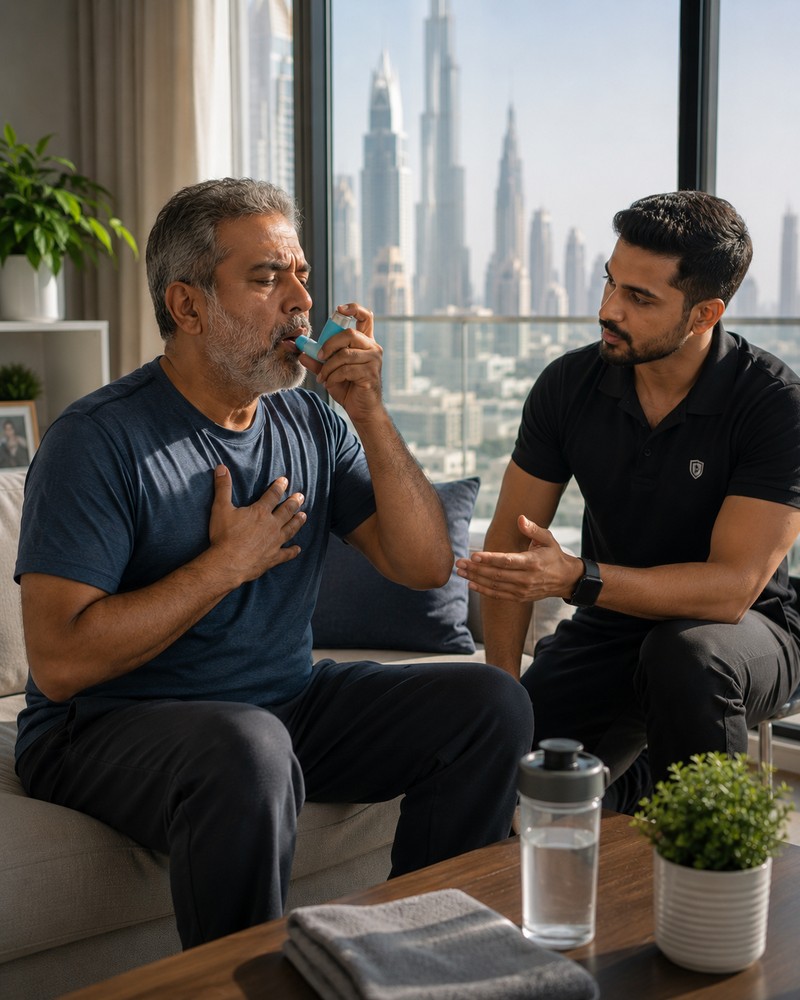
For people living with COPD, daily life can already feel physically demanding. Long walking distances, stairs, heat exposure and low stamina may make even simple tasks feel exhausting.
But one overlooked problem is inactivity itself. Many people with COPD gradually stop moving because they fear breathlessness. Unfortunately, reduced movement weakens the muscles and cardiovascular system, making daily activity feel even harder over time.
This creates a cycle of low stamina, low movement and worsening physical conditioning.
How Sedentary Lifestyles Affect COPD
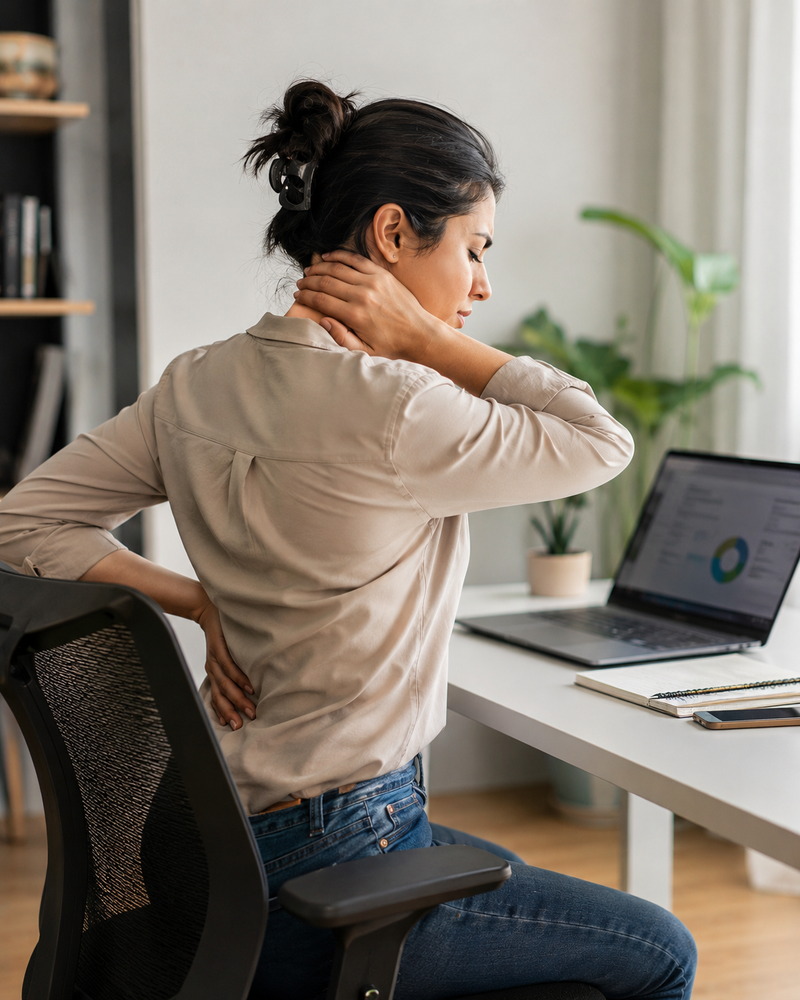
Modern lifestyles already reduce movement significantly. Office jobs, driving, elevators and screen-heavy routines reduce daily muscle activity.
For someone with COPD, this can contribute to:
Reduced stamina
Lower leg and core strength
Poor movement confidence
Higher fatigue during daily tasks
Reduced cardiovascular conditioning
Over time, simple movements begin to feel more physically demanding.
Why Strength Training Helps COPD Patients
Strength training helps the body become more efficient during movement. Stronger muscles require less relative effort during daily activities, which may help reduce overall fatigue.
Benefits can include:
Improved leg strength for walking and stairs
Better posture and breathing mechanics
Improved stamina for daily movement
Reduced physical deconditioning
Better confidence during activity
The goal is not bodybuilding or extreme fitness. It is improving quality of life and physical capability.
Why Low-Intensity Consistency Works Better Than Extreme Exercise
Many people think exercise only counts if it is intense. For COPD, extreme workouts are often unnecessary and may reduce consistency.
A better approach focuses on:
Moderate resistance training
Walking-based conditioning
Controlled breathing
Recovery-focused progression
Small improvements repeated consistently create long-term physical adaptation.
Best Exercises for COPD-Friendly Fitness
Supported squats
Leg press
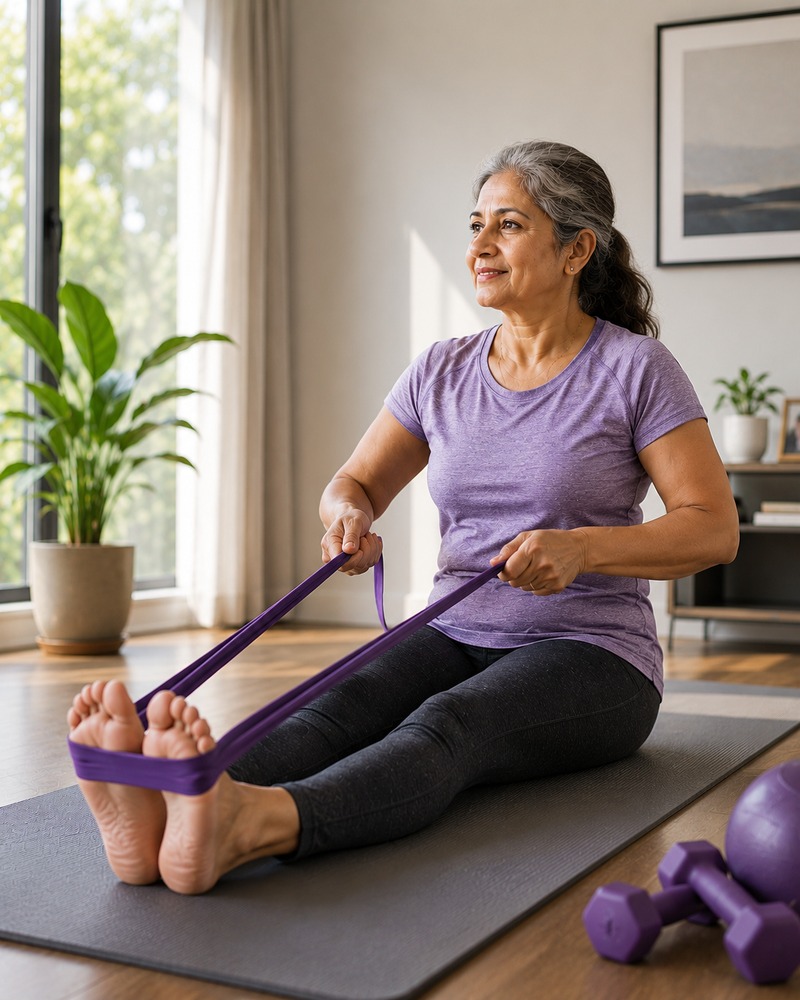
Resistance band rows
Chest press with moderate resistance
Step-ups
Walking intervals
Mobility and breathing drills
Exercises should be adjusted to individual breathing comfort and medical guidance.
Why Posture and Mobility Matter for Breathing
Poor posture can reduce breathing efficiency further. Tight chest muscles, weak upper back muscles and prolonged sitting may affect breathing mechanics.
Mobility and posture work can support:
Better chest expansion
Improved upper body movement
Reduced stiffness
Better breathing comfort during exercise
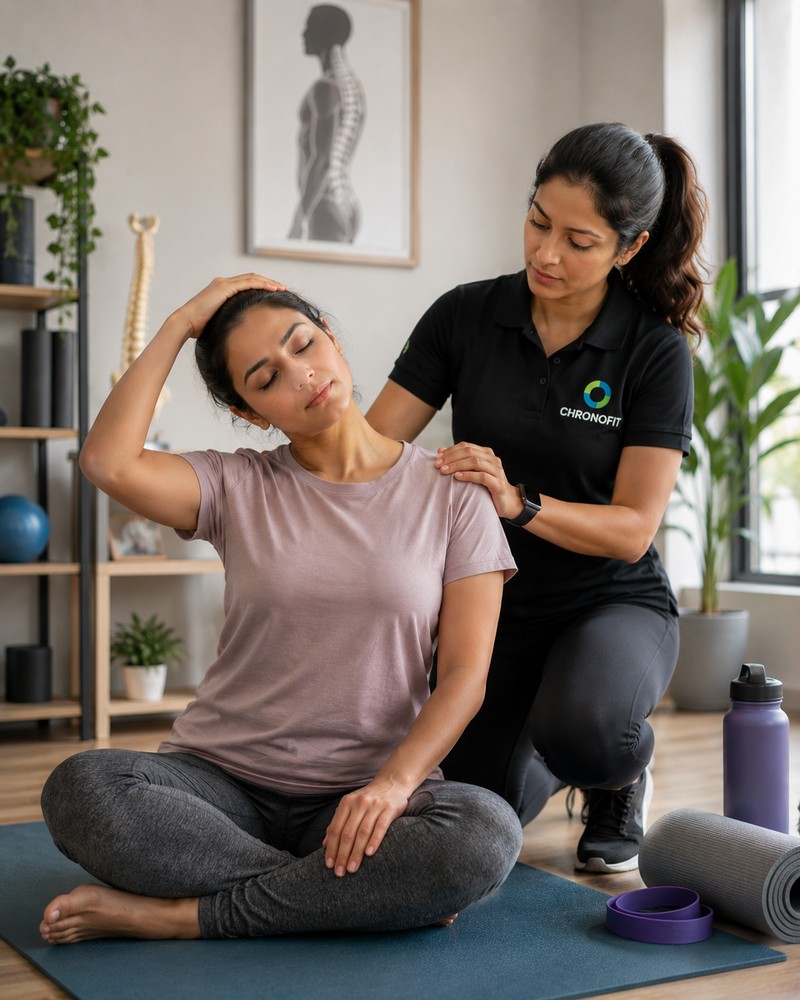
This is why COPD-friendly fitness should include mobility work alongside strength training.
How Recovery Helps COPD Management
Fatigue management is important. Recovery should be built into the training plan.
Allow rest between sessions
Avoid overtraining
Improve hydration and sleep quality
Use pacing instead of rushing workouts
Condition-conscious training focuses on sustainable progression rather than pushing through exhaustion.
How Chronofit Supports COPD-Friendly Personal Training
Chronofit’s condition-conscious personal training approach is designed for individuals managing health-related exercise limitations. Programs are adapted around breathing tolerance, stamina, recovery and movement confidence.
Instead of generic high-intensity workouts, Chronofit focuses on safer progression, mobility and functional strength to help clients move better and feel more capable over time.
Signs Your COPD-Friendly Routine Is Helping
Walking feels easier
Reduced fatigue during basic tasks
Improved posture and movement
Better stamina over time
Improved consistency with movement habits
Progress should be steady, manageable and sustainable.
FAQs
Can strength training help COPD?
Yes. Moderate resistance training can improve muscular efficiency, stamina and movement confidence.
Is walking important for COPD?
Yes. Walking helps improve conditioning and supports daily movement tolerance.
Why does inactivity worsen COPD symptoms?
Reduced movement weakens muscles and conditioning, making physical activity feel harder over time.
Should COPD patients avoid exercise?
No. Structured and medically appropriate exercise is often beneficial for improving physical function.
How does Chronofit approach COPD-focused fitness?
Chronofit uses condition-conscious training focused on safer progression, recovery and movement confidence.
Final Thoughts
Living with COPD becomes harder when inactivity reduces physical capacity further. Building strength, improving movement and increasing conditioning gradually can help daily life feel more manageable.
Chronofit’s condition-conscious personal training approach supports safer, more sustainable fitness progression for people looking to improve movement confidence, stamina and long-term physical resilience while managing COPD.