Coronary Artery Disease and Strength Training: Can Exercise Help the Heart Become Stronger?
Coronary artery disease, often called CAD, develops when blood flow to the heart becomes restricted due to plaque buildup inside the arteries. Many people associate heart disease only with age, but modern lifestyle habits such as long sitting hours, stress, obesity, diabetes and inactivity are increasing cardiovascular risk much earlier.
For years, people with heart concerns were told to avoid physical strain completely. Today, structured and medically appropriate exercise is widely recognised as one of the most important lifestyle tools for improving cardiovascular health, stamina and long-term quality of life.
The key is choosing the right type of training.
What Is Coronary Artery Disease?
Coronary artery disease occurs when coronary arteries narrow or harden, reducing blood supply to the heart muscle. This can increase the risk of chest discomfort, fatigue, reduced stamina, heart attack and long-term cardiovascular complications.
Common risk factors include:
High blood pressure
High cholesterol and abnormal lipid profile
Diabetes or insulin resistance
Smoking
Obesity and abdominal fat
Low physical activity
Chronic stress and poor sleep
Many of these factors are strongly influenced by lifestyle habits and physical conditioning.
Why Exercise Matters for Coronary Artery Disease
Exercise helps improve circulation, cardiovascular efficiency and overall physical resilience. Properly structured training can help the body use oxygen more efficiently while improving movement capacity and stamina.
Exercise may help support:
Improved circulation
Healthier blood pressure
Better cholesterol and lipid profile markers
Reduced abdominal fat
Improved energy and stamina
Better glucose and insulin regulation
This is why modern cardiac recovery programs increasingly include structured movement and resistance training.
Why Strength Training Is Important for Heart Health
Most people think only cardio matters for heart disease. Cardio is useful, but strength training provides additional metabolic and physical benefits.
Strength training helps:
Improve muscle quality and circulation
Support healthier metabolism
Reduce insulin resistance
Improve movement confidence and stamina
Support long-term independence and physical function
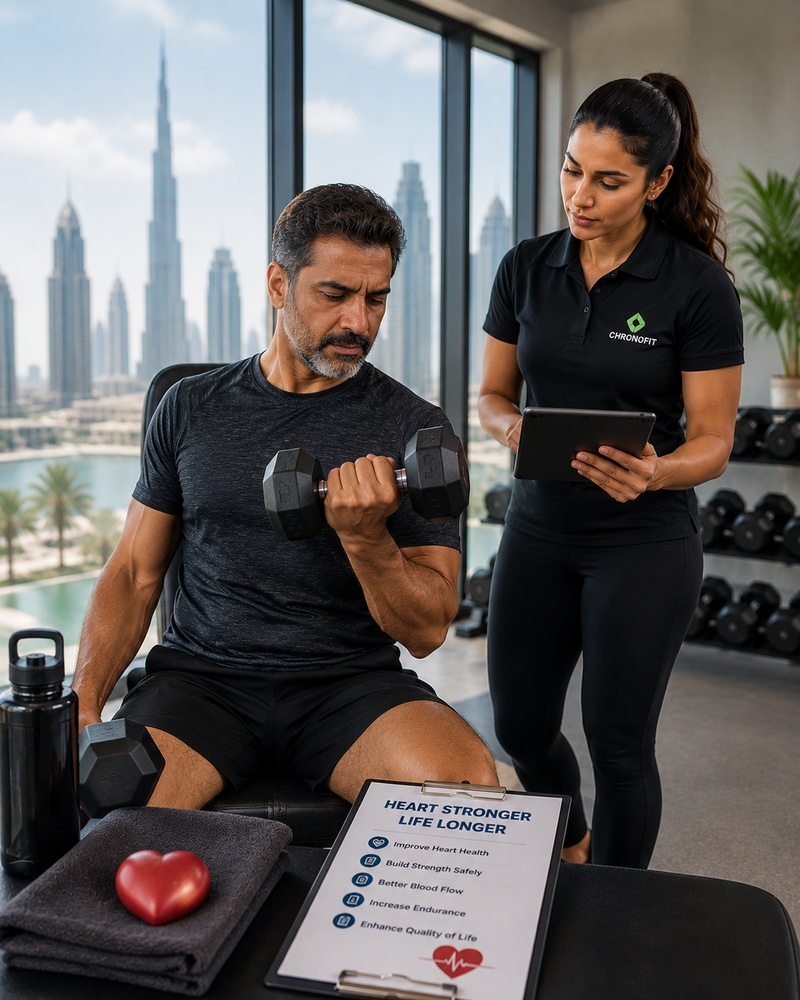
When programmed correctly, moderate resistance training can become an important part of cardiovascular support.
How Strength Training Should Be Structured for CAD
Exercise intensity must be controlled carefully for people managing coronary artery disease. The goal is not extreme intensity or exhaustion. The goal is gradual cardiovascular and muscular improvement.
Use moderate resistance instead of maximal lifting
Focus on controlled breathing
Avoid excessive strain or breath-holding
Allow adequate rest between exercises
Progress gradually over time
Condition-conscious training is essential because every individual’s cardiovascular status and recovery ability are different.
Best Exercises for Coronary Artery Disease Support
Exercises should improve movement and circulation without creating unnecessary stress.
Walking on flat or mild incline surfaces
Leg press with moderate load
Supported squats
Seated rows
Chest press with controlled resistance
Light farmer carries
Mobility and breathing drills
Programs should always be adjusted according to medical advice and exercise tolerance.
Why Walking Remains One of the Best Tools
Walking improves circulation, supports cardiovascular fitness and reduces sedentary time without excessive joint stress.
Walking can help:
Improve stamina gradually
Support healthy blood pressure
Reduce stress levels
Improve daily movement consistency
Even short daily walks repeated consistently can create meaningful cardiovascular benefits over time.
Why Recovery and Stress Management Matter
Stress, poor sleep and overtraining can negatively affect cardiovascular health. Many professionals with heart concerns also deal with chronic work stress and mental fatigue.
A heart-conscious training plan should include:
Recovery-focused programming
Sleep improvement strategies
Stress management support
Sustainable exercise frequency
The body responds best to consistency and gradual progression.
How Chronofit Supports Condition-Conscious Cardiac Fitness
Chronofit’s condition-conscious personal training approach focuses on safer progression for people managing metabolic and cardiovascular conditions. Training is adapted around recovery, movement quality, stamina and overall health status.
Instead of pushing aggressive intensity, Chronofit focuses on helping clients improve movement confidence, physical resilience and long-term cardiovascular support through structured training.
Signs Your Heart-Focused Fitness Plan Is Working
Improved stamina during walking or stairs
Reduced fatigue during daily tasks
Better exercise recovery
Improved movement confidence
More consistent physical activity levels
Progress should happen gradually and safely.
FAQs
Can people with coronary artery disease exercise?
Yes, many people with coronary artery disease benefit from medically appropriate and structured exercise programs.
Is strength training safe for coronary artery disease?
Moderate resistance training may be beneficial when approved medically and properly supervised.
What type of exercise is best for CAD?
Walking, moderate strength training, mobility work and cardiovascular conditioning are commonly recommended.
Can exercise improve heart health naturally?
Regular exercise supports circulation, blood pressure, metabolic health and cardiovascular efficiency.
How does Chronofit approach heart-conscious personal training?
Chronofit uses condition-conscious programming focused on safe progression, stamina, movement quality and long-term consistency.
Final Thoughts
Coronary artery disease does not automatically mean avoiding movement. In many cases, structured and medically guided exercise becomes one of the most important tools for improving cardiovascular resilience and quality of life.
Chronofit’s condition-conscious personal training approach helps create safer, more sustainable fitness strategies for people looking to support long-term heart health through smarter movement and strength development.