PCOD and Strength Training: Why Muscle Building Supports Hormonal Health
Polycystic Ovarian Disease (PCOD) affects far more than body weight. Many women dealing with PCOD experience fatigue, cravings, irregular cycles, abdominal fat gain and difficulty maintaining energy levels.
Unfortunately, most fitness advice still focuses only on aggressive fat loss. Endless cardio, crash diets and exhausting workout routines often leave women feeling frustrated and burned out.
The problem is that PCOD is closely linked to metabolism, insulin sensitivity and hormonal balance. This is why strength training has become one of the most effective long-term fitness approaches for women managing PCOD.
How PCOD Affects the Body
PCOD influences several systems in the body at the same time.
Insulin resistance
Weight gain and abdominal fat storage
Low energy and fatigue
Hormonal fluctuations
Difficulty recovering from extreme dieting
Mood and sleep disturbances
This means fitness plans for PCOD should focus on supporting metabolism and recovery instead of simply burning calories.
Why Strength Training Helps Women with PCOD
Strength training improves how the body handles glucose and energy. Building muscle helps improve insulin sensitivity, which is one of the most important factors in managing PCOD-related metabolic issues.
Strength training may help:
Improve insulin sensitivity
Support healthier body composition
Reduce abdominal fat accumulation
Improve energy levels
Support healthier metabolism
Build confidence and physical resilience
The focus shifts from punishing the body to strengthening it.
Why Excessive Cardio Often Backfires
Many women with PCOD try to lose weight through excessive cardio and restrictive eating. While this may create short-term scale changes, it can also increase fatigue and reduce muscle mass.
Signs a plan may be too aggressive include:
Constant tiredness
Poor workout recovery
Strong cravings and energy crashes
Difficulty maintaining consistency
Feeling physically drained after exercise
Condition-conscious training focuses on long-term sustainability instead.
Best Strength Exercises for PCOD-Friendly Fitness
Exercises should improve muscle activity and movement quality while supporting sustainable progression.
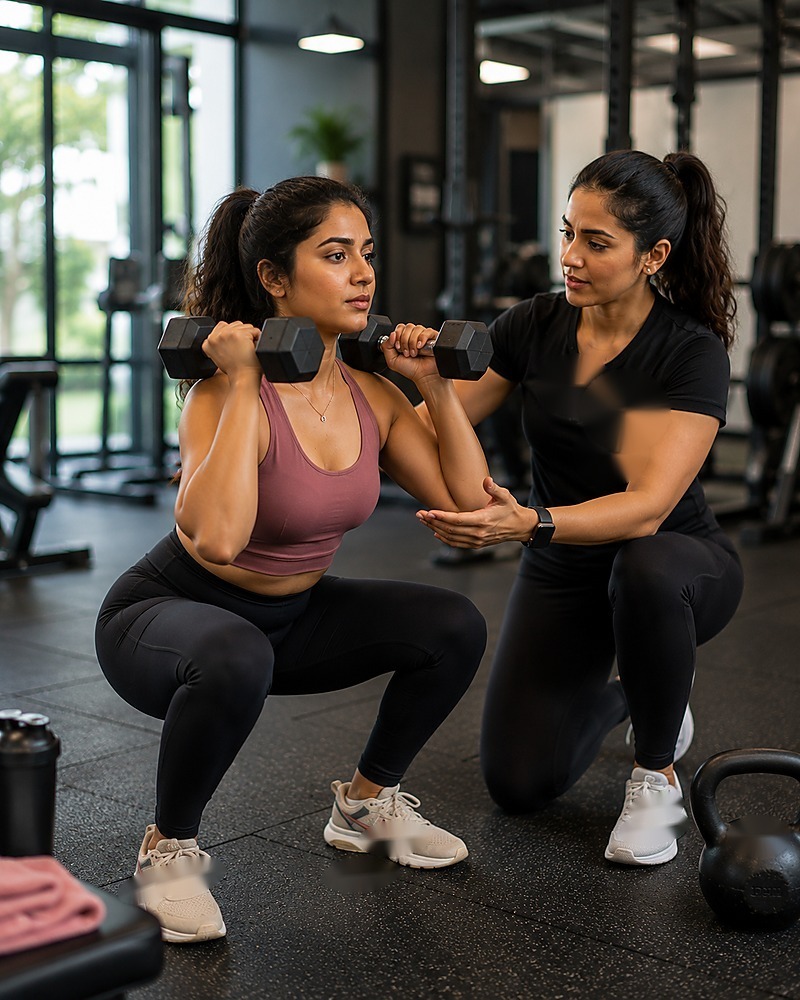
Goblet squats or leg press
Romanian deadlifts
Step-ups
Rows and pull-downs
Chest press
Farmer carries
Compound movements that train large muscle groups are especially effective for metabolic health.
Why Walking Still Matters for PCOD
Walking helps reduce sedentary time and supports blood sugar regulation without creating excessive stress.
Walking may help:
Improve daily energy expenditure
Reduce stress levels
Support insulin sensitivity
Improve consistency with movement
Simple movement habits repeated consistently often create powerful long-term benefits.
Why Recovery and Sleep Matter for Hormonal Health
Poor sleep and chronic stress can worsen hormonal imbalance, cravings and fatigue. This is why recovery should be part of every PCOD-focused fitness plan.
Sleep supports hormonal regulation
Stress management supports recovery
Moderate training reduces burnout risk
Consistency improves long-term metabolic health
Health improvement works best when the body feels supported instead of constantly stressed.
Why Muscle Mass Matters More Than Scale Weight
Many women with PCOD become overly focused on losing weight quickly. But preserving and building muscle is often more important for long-term metabolic health.
Muscle supports:
Better glucose control
Higher energy expenditure
Improved strength and posture
Better long-term body composition
This is why strength training should be central to PCOD-focused fitness.
How Chronofit Supports PCOD-Friendly Personal Training
Chronofit’s condition-conscious personal training approach focuses on sustainable strength training, metabolic health and recovery-aware programming for women managing PCOD.
Instead of using extreme workout methods, Chronofit focuses on helping women build strength, improve movement quality and create consistent long-term fitness habits.
Signs Your PCOD Fitness Plan Is Working
Improved energy levels
Better workout recovery
Improved strength and stamina
Reduced waist measurement
More consistent movement habits
Progress should be measured through overall health improvements, not only scale weight.
FAQs
Is strength training good for PCOD?
Yes. Strength training helps improve insulin sensitivity, metabolism and body composition in a sustainable way.
Why is insulin resistance important in PCOD?
Insulin resistance is closely linked to hormonal imbalance, fat storage and metabolic health in many women with PCOD.
Should women with PCOD avoid cardio?
No. Moderate cardio and walking help, but strength training should also be included for metabolic support.
Can building muscle help with PCOD?
Yes. Muscle improves glucose handling and supports healthier metabolism.
How does Chronofit approach PCOD-focused training?
Chronofit uses condition-conscious programming focused on sustainable strength training, recovery and long-term hormonal health support.
Final Thoughts
PCOD management should focus on supporting metabolism, hormonal balance and long-term resilience instead of extreme fat loss methods. Strength training helps create a healthier and more sustainable foundation for progress.
Chronofit’s condition-conscious personal training approach helps women with PCOD build strength, improve energy and develop healthier long-term fitness habits through smarter training strategies.